Trézor Suite Guide – Securely Manage Your Crypto with Confidence
Introduction
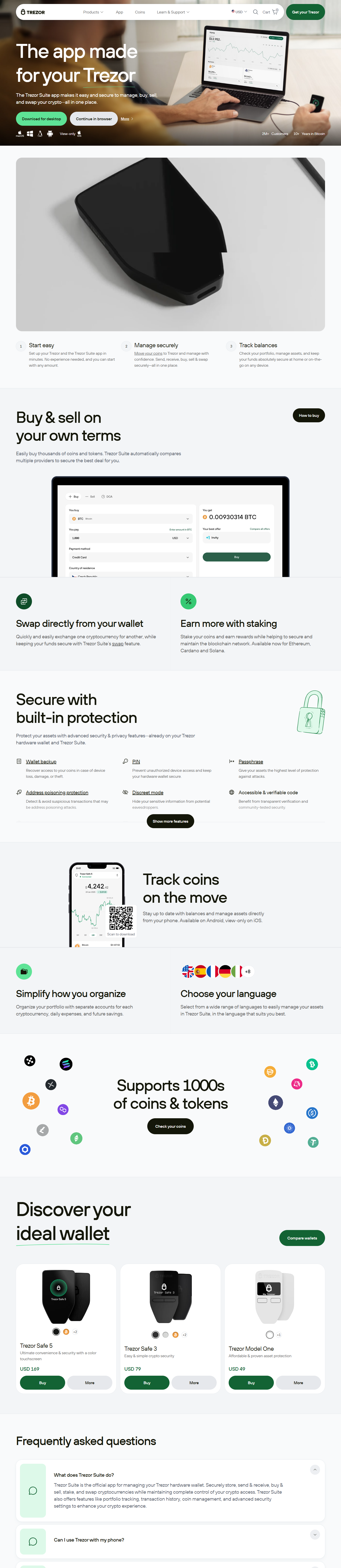
Trézor Suite is the official software platform developed to work with Trezor® hardware wallets. It allows users to manage cryptocurrencies safely while keeping private keys completely offline. This guide is designed to help users understand how the software works, why it matters, and how to use it correctly from the beginning.
Cryptocurrency ownership is about control. Trézor Suite supports this idea by removing dependence on third parties and giving users direct access to their funds through their own hardware device.
What Makes Trézor Suite Different
Unlike online wallets or exchange dashboards, Trézor Suite does not require account creation, email addresses, or passwords. It does not store user data on external servers or control any funds.
The software acts as a secure interface that displays wallet information and sends instructions to the hardware device. All sensitive operations happen on the device itself, not on the computer.
Understanding Self-Custody
Self-custody means you are fully responsible for your assets. No company can freeze your funds, reset your password, or recover your wallet for you.
Trézor Suite is built to support self-custody by combining usability with strong security principles. It helps users interact with blockchains while keeping control firmly in their hands.
How Trézor Suite Can Be Used
Users can access Trézor Suite either through a desktop application or a web-based interface.
The desktop version is ideal for long-term use and offers a stable environment that reduces exposure to browser-based risks.
The web version allows access without installing software, which can be helpful when using a trusted temporary device. In both cases, the hardware wallet remains essential.
Preparing for a Safe Setup
Before starting, users should ensure they are in a private and calm environment. Wallet setup should never be done in public spaces or on shared computers.
It is also important to have pen and paper ready to record important information during the setup process. Proper preparation reduces the risk of mistakes.
Connecting the Hardware Wallet
When the Trezor device is connected to a computer, Trézor Suite automatically detects it. The software then guides the user through the necessary steps.
If the device is new, initialization will be required. If it has been used before, Trézor Suite will simply load the existing wallet information.
Device Security Configuration
During the initial setup, users choose a PIN code. This PIN protects the device in case it is lost or accessed by someone else.
The PIN is entered directly on the hardware wallet screen, which prevents exposure to keyloggers or malicious software on the computer.
Recovery Phrase Explained Clearly
The recovery phrase is a series of words generated by the device. It represents the true ownership of the wallet.
If the hardware wallet is damaged or replaced, this phrase allows the wallet to be restored on a new device. Without it, funds cannot be recovered.
How to Store the Recovery Phrase Safely
The recovery phrase should always be written down offline. It should never be saved as a photo, text file, email, or cloud note.
Users should store it in a secure location where only they can access it. Anyone who sees the phrase can control the wallet.
Creating Cryptocurrency Accounts
Once setup is complete, users can create accounts for supported cryptocurrencies. Each account functions independently and can be renamed for clarity.
This system allows users to organize funds, track different assets, and manage portfolios more efficiently.
Checking Balances and Activity
Trézor Suite displays balances and transaction history in a clean and simple dashboard. Users can see confirmations, incoming transfers, and outgoing transactions.
All information shown is read directly from the blockchain, not stored by the software.
Receiving Cryptocurrency Safely
To receive funds, users generate a receiving address within Trézor Suite. The address is displayed on both the computer and the hardware wallet.
Users should always verify that both addresses match before sharing the address. This protects against malicious software altering addresses.
Sending Funds with Full Control
Sending cryptocurrency requires confirmation on the hardware wallet. Trézor Suite prepares the transaction, but the device displays all details before approval.
This step ensures that no transaction can be completed without the user’s physical confirmation.
Transaction Fees and Timing
Blockchain transactions require network fees. Trézor Suite provides recommended fee options based on current network activity.
Users can choose faster confirmation times or lower fees depending on their needs. Advanced users may adjust fees manually.
Privacy and Transparency Features
Trézor Suite includes features designed to increase privacy. Users can hide balances, customize transaction settings, and manage how information is displayed.
These tools help users maintain awareness without revealing unnecessary data.
Supported Coins and Tokens
The software supports many major cryptocurrencies and token standards. This allows users to manage diverse assets in one secure place.
Support continues to expand as blockchain ecosystems grow and change.
Optional Exchange and Purchase Tools
Some versions of Trézor Suite include optional tools for exchanging or purchasing cryptocurrencies through third-party services.
These tools are optional and do not reduce security. All actions still require confirmation on the hardware wallet.
Keeping Everything Updated
Regular updates improve security and performance. Users should keep both the Trézor Suite software and device firmware up to date.
Updates should only be performed through official sources to avoid fake or malicious software.
Mistakes New Users Often Make
Common mistakes include rushing through setup, not verifying addresses, and storing recovery phrases digitally.
Understanding each step and following best practices greatly reduces security risks.
Who Should Use Trézor Suite
Trézor Suite is suitable for beginners learning self-custody, long-term holders, and experienced crypto users.
It is especially helpful for users who want independence from centralized exchanges.
Building Long-Term Security Habits
Using a hardware wallet is part of an ongoing security routine. Careful verification, private storage, and regular updates help protect assets over time.
Trézor Suite supports these habits through a clear and structured interface.
Conclusion
Trézor Suite provides a secure and reliable way to manage cryptocurrency using a hardware wallet. By keeping private keys offline and requiring physical confirmation, it offers strong protection without sacrificing usability.